
TAKE BACK WHAT IS YOURS.
Aconomy: Complete Crypto Platform
Introduction
In the rapidly evolving world of digital finance, the demand for versatile, secure, and real-time crypto platforms is growing exponentially. Aconomy is a powerful, full-featured cryptocurrency ecosystem developed to empower users with seamless crypto transactions, asset management, and spending capabilities. This case study explores the strategic vision, technical execution, and successful implementation of Aconomy, a project built to redefine crypto usability and accessibility.

Background
As cryptocurrencies mature from speculative assets to usable currencies, there's a strong demand for platforms that go beyond simple trading. The client envisioned a single hub where users could trade, buy, sell, exchange, and spend cryptocurrencies — essentially, a crypto-based economy.
The idea behind Aconomy was to bridge the gap between decentralized finance (DeFi) and real-world usability. The system needed to offer users everything — from trading and marketplace capabilities to wallet management, crypto cards, and fiat conversion — under one secure, reliable platform.
Challenges
Comprehensive Feature Integration
Combining trading, exchange, wallet, marketplace, crypto cards, and staking (earning) into one unified interface.
Real-Time Performance
Enabling real-time trading and exchange functionalities with instant updates and minimal latency.
High Security Standards
Ensuring the platform adhered to best-in-class security practices given the sensitive nature of financial and personal data.
Regulatory Compliance
Integrating fiat gateways and crypto cards while keeping in line with legal and KYC/AML requirements.
User Experience
Creating a seamless experience for both novice and expert crypto users.
Blockchain Integration
Tying core platform operations into multiple blockchain networks (e.g., Ethereum, Bitcoin, Litecoin).
Scalability
Architecting the system for high performance, uptime, and scalability across a global user base.
The Solution
To meet these challenges, a modern tech stack and structured development methodology were adopted. Here’s how the solution was built:
1. Platform Architecture & Design
- Built a modular architecture using Next.js and Node.js, enabling fast performance, SSR, and flexibility for new features.
- MongoDB was used for high-performance storage of user data, transactions, and logs with optimized indexing and queries.
2. Core Features Developed
- Trading Engine:: Real-time crypto trading using websocket-based connections with third-party exchanges.
- Buy/Sell Crypto:: Seamless fiat-to-crypto and crypto-to-fiat conversions via 3rd-party API integrations.
- Marketplace:: A dedicated portal for buying physical/digital goods using crypto.
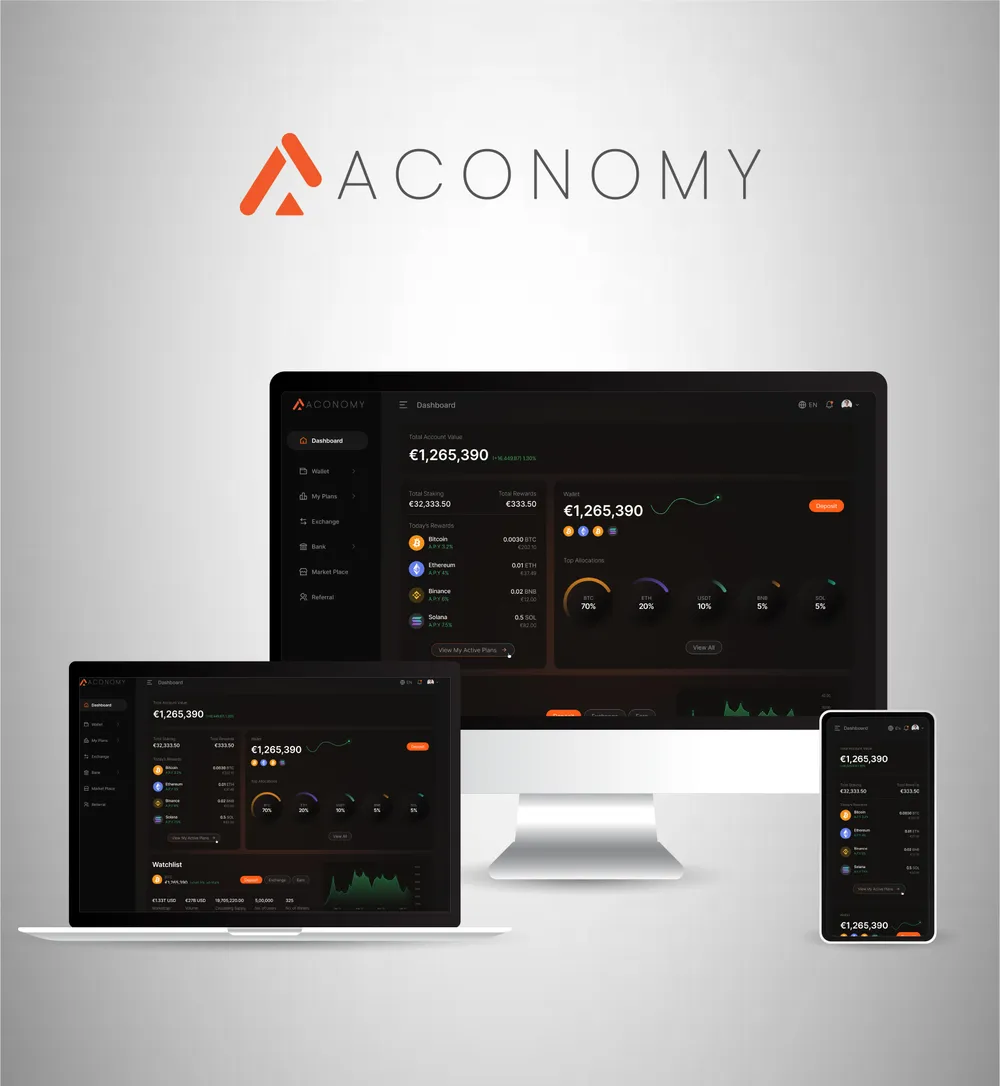
- Crypto Wallet:: Unified dashboard showing balances of BTC, ETH, USDT, Litecoin, and more.
- Crypto Card:: Integration of a crypto debit card for online and in-store payments, including top-up functionality.
- Earn Crypto:: Staking module where users can lock crypto to earn yield over a defined period.
- Security:: Two-Factor Authentication, encryption of private keys, transaction signing, secure KYC flows, rate-limiting, and DDoS protection.
- Admin Panel:: Comprehensive control panel to manage users, KYC, transactions, reports, and platform metrics.
3. Blockchain and API Integration
- Implemented direct integration with major blockchain nodes.
- Used Web3 and other blockchain SDKs to handle wallet creation, transaction broadcasting, and staking mechanisms.
- Partnered with APIs for crypto pricing, identity verification (KYC), payment gateways, and card issuance.
4. Real-Time Data Handling
- Implemented WebSockets for live trading, exchange rates, and wallet updates.
- Used cron jobs and workers for syncing on-chain data and processing batch jobs.
5. Deployment & Infrastructure
- Deployed on scalable cloud infrastructure with containerization (Docker) and CI/CD pipelines for reliable rollouts.
- Monitored with tools like Prometheus/Grafana and integrated alert systems for anomaly detection.

Tools & Technologies
- Frontend:: Next.js, Tailwind CSS, Redux
- Backend:: Node.js, Express
- Database:: MongoDB
- Blockchain:: Ethereum, Bitcoin, Litecoin integrations via Web3 and native SDKs
- Authentication & Security:: JWT, OAuth2, 2FA, KYC integration
- APIs Integrated:: Chainlink, CryptoCompare, Plaid, Onfido, payment gateways
- DevOps:: Docker, NGINX, GitHub Action

Results
- Unified User Experience:: All essential crypto features in one platform — reducing friction and increasing engagement.
- Performance & Scalability:: The real-time infrastructure supports thousands of concurrent users with minimal latency.
- High Security:: The platform meets enterprise-level security benchmarks with robust protection layers.
- User Adoption:: Early adoption rates exceeded expectations due to user-friendly UI and diverse offerings.
- Business Growth:: Enabled the client to attract partnerships and expand to new markets by offering crypto cards and staking.
Conclusion
Aconomy is a shining example of what’s possible when user-centered design meets cutting-edge blockchain technology. The platform not only serves as a secure crypto hub but also fosters mainstream crypto adoption by offering real-world usability and financial freedom. The success of this project reflects the power of tailored solutions built on scalable modern stacks.
Have a Project? Let’s Discuss!
Let our engineering and blockchain experts help you build scalable, enterprise-ready digital solutions.
Get in Touch →